

On 11 April, we celebrate International Day for Maternal Health and Rights (#MaternalHealth) and join the global movement calling for every person’s right to respectful, quality, safe and comprehensive maternal healthcare. To commemorate this day, we are amplifying the voices of two CIPHER Grantees whose research is transforming the health and futures of women, children and families living with and affected by HIV.
The Collaborative Initiative for Paediatric HIV Education and Research (CIPHER) of IAS – the International AIDS Society – closes scientific gaps by placing the unique challenges of infants, children, adolescents and young people living with and affected by HIV on the global public health agenda.
The CIPHER Research Grant Programme awards early-career investigators up to USD 140,000 to address research gaps in paediatric and adolescent HIV in countries with limited resources for HIV research.
Meet Christina Laurenzi and Dorina Onoya:
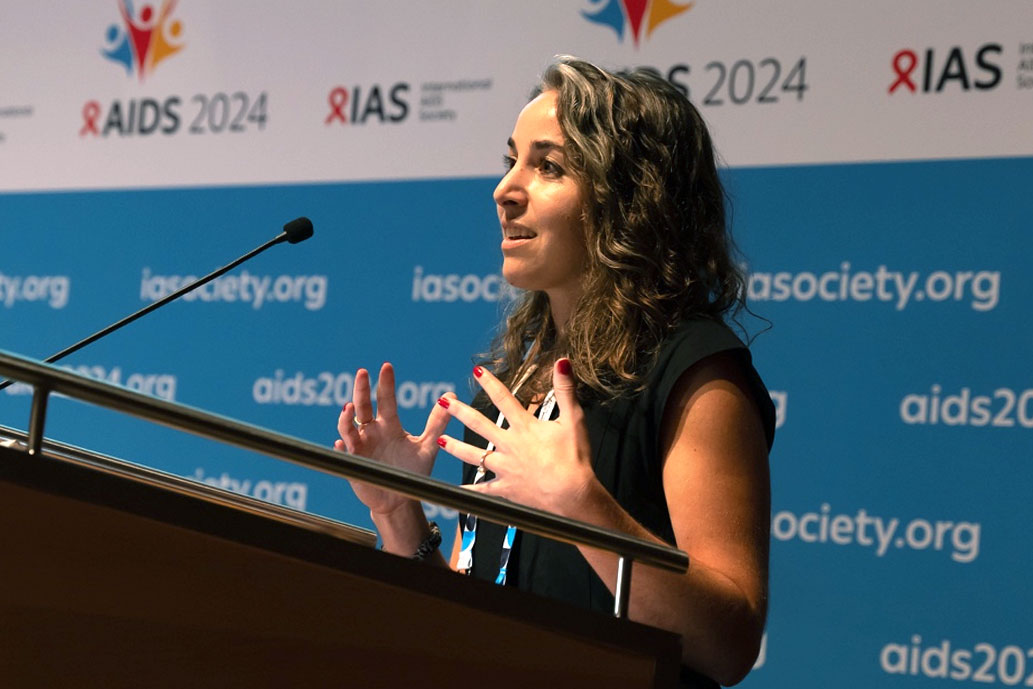
 Christina Laurenzi, South Africa, Stellenbosch University
Christina Laurenzi is a senior researcher at Stellenbosch University’s Institute for Life Course Health Research. She has over a decade of experience living and working in South Africa, where her research has focused on adolescent mental health, HIV and maternal health interventions. Christina is committed to pursuing avenues of research and intervention that lead to new interdisciplinary understanding, promote effective solutions and have clear social value.
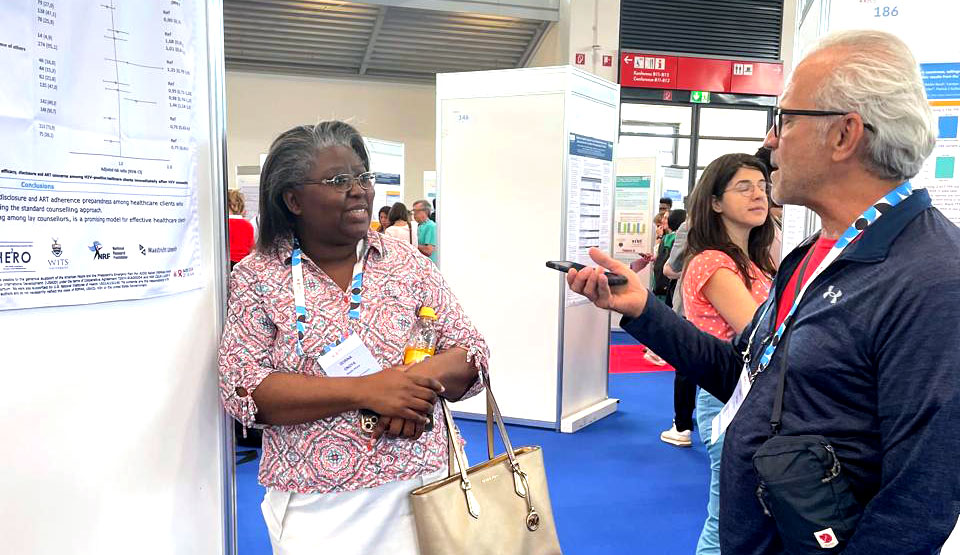
 Dorina Onoya, South Africa, Health Economics and Epidemiology Research Office
Dorina Onoya is an epidemiologist with extensive experience in HIV research. She has worked in laboratory sciences and earned an MPH in epidemiology and a PhD in public health. Her studies focus on the ART cascade and outcomes for people living with HIV in South Africa. She leads research on linkage to ART and retention in care and has developed and evaluated various interventions to improve adherence. This includes the “Undetectable & You” intervention promoting the U=U message, which is now integral to South Africa’s National HIV Treatment Literacy Framework (2023).
How did you become involved in maternal health research and what was your motivation?
Christina: My passion for maternal health started during the year I spent in rural Zithulele, South Africa, after graduation. I helped manage a cohort study following nearly 500 mothers and their infants for the first year of life, which was a collaboration between the local hospital, a maternal and child health NGO, Philani, and Stellenbosch University, where I work now. I learnt so much through our three-monthly follow-up visits with mothers and babies – about their milestones and health challenges, their families and communities, and just how incredible yet tenuous this first year of life can be. I also became comfortable in the language of research and felt this was a compelling position from which to explore these experiences and solutions further.
Dorina: Soon after my MPH, I was fortunate to join a team focused on developing and piloting an HIV prevention behavioural intervention tailored for young women. This was the foundation of my PhD work. This experience was transformative, sparking my deep interest in intervention development and evaluation, particularly concerning women’s health. Given the inherent link between women’s health and maternal and child health, my work naturally evolved to address the complex needs of families living with and affected by HIV.
How has CIPHER impacted your journey?
Christina: CIPHER has enabled me to continue to think critically about how to support mothers in South Africa’s Eastern Cape, and I’ve integrated this focus with my research interest in adolescent mental health. My CIPHER project explores the experiences of young mothers living with HIV and their retention in HIV care. Adolescent mothers are contending with biological, psychological, social and identity shifts – things that change during adolescence, but also in pregnancy and postpartum, as these mothers suddenly have to care for a child. CIPHER has been a route for me to delve into the experiences and needs of this important population, which is particularly vulnerable to HIV acquisition and interrupted treatment.
Dorina: CIPHER was truly a pivotal catalyst in my career. As a first-time principal investigator, I received essential funding from CIPHER to generate crucial preliminary data, laying the groundwork for subsequent project development and fundraising. More importantly, it validated my research vision and significantly boosted my confidence. My CIPHER award was instrumental in allowing me to investigate the critical area of early infant HIV testing and diagnosis, crucial for timely ART initiation. We developed and rigorously tested a motivational interviewing-based retention counselling intervention for mothers, focusing on enhancing mother-child pair retention in the early infant diagnosis schedule, as well as improving maternal HIV treatment retention and viral load outcomes. CIPHER was not just a funding opportunity; it was a launchpad that propelled my research trajectory.
Given that women and girls are disproportionately impacted by HIV, how can research better support this population?
Christina: Our team analysed cohort data collected from 311 young mothers living with HIV in 2018-19 to better understand links between age and adherence to ART. We found that adolescent girls who had a first birth at a younger age had poorer ART adherence, as did those who experienced internalized HIV stigma, did not live with a caregiver and lacked social support (manuscript under review). This kind of research contributes to a stronger evidence base on barriers to care. It is also essential to provide specific factors that could be pinpointed to create more effective programming and train health providers to recognize certain key information when consulting with clients.
Dorina: While micro-level interventions focused on sexual behaviour are important, I believe that research must also address the broader socioeconomic determinants that exacerbate women’s and girls’ vulnerability to HIV. This includes investigating and advocating for policies that improve access to quality education, ensure that girls remain in school through tertiary levels, and support women’s entrepreneurial endeavours, facilitating their transition from informal to formal economic participation.
What impact have you witnessed from the US funding cuts?
Christina: From what I have seen and heard, these cuts are uniquely devastating and will have cascading effects on HIV prevention, treatment and retention. This is dangerous for all groups living with and affected by HIV, but young mothers face distinct risks. Adolescence is a time of flux, and short-term pauses in health services or supportive programming have a significant impact on health trajectories. We know that psychosocial support, including peer support, is critical for young mothers’ retention in care. The radical nature of these cuts in South Africa takes away the very things that are so vital for young mothers’ ability to prevent, treat and manage HIV.
Dorina: The evolving impact of US funding cuts underscores the critical need for countries to invest in their own research and development infrastructure. While I cannot provide definitive conclusions at this stage, it’s clear that relying solely on external funding can create vulnerabilities. This situation highlights the importance of fostering sustainable, locally driven research initiatives to ensure resilience against external shocks.
What message would you like to share with researchers, policy makers and healthcare providers?
Christina: We cannot take maternal health and rights for granted. Our research with young mothers in South Africa has shown how they are too often overlooked, shamed, discarded and stigmatized. Yet they, too, have a right to an education, to fair and caring treatment by health providers, and to safety and love in their own homes. In carrying out research, policy and service provision that supports mothers, we also support their capacity to nurture and teach the next generation.
Dorina: As a mother, I deeply understand the pivotal role women play in the stability and prosperity of families and societies. On this International Day for Maternal Health and Rights, I urge researchers, policy makers, healthcare providers and the public to recognize that investing in maternal health is not just a matter of individual well-being; it is a strategic investment in the future of our communities.